How LayerTen Works
How your store becomes the answer. Four steps.
Connect. Enrich. Price. Win. No manual data entry, no code changes. Connect your store and we handle the rest.
The shift is happening now
E-commerce discovery is moving from search engines to AI agents
YoY growth in orders from AI searches on Shopify. AI traffic up 8x
Source: Shopify Q1 2026 earnings (SEC filing)
shopping queries per day in ChatGPT
Source: OpenAI Economic Research, 2026
projected global agentic commerce by 2030. $900B–1T in US B2C alone
Source: McKinsey, October 2025
And it converts: AI-referred traffic converts 54% better than non-AI sources.Source: Adobe, May 2026
Most stores aren't losing these buyers because their products are worse. Agents simply can't read their pages. That part is fixable in weeks.
The four steps
Connect. Enrich. Price. Win.
No manual data entry. No code changes. Connect your store and we handle the rest.
Connect
One click. Every AI platform.
Connect your Shopify, commercetools, or BigCommerce store. LayerTen syncs your product catalog, pricing, inventory, and fulfillment data in minutes.
The onboarding
Enrich
Fill every gap agents need.
Our AI automatically adds structured attributes, standardized taxonomy, machine-readable delivery terms, and competitive positioning.
The magic
Price
The optimal offer, every query.
Every agent query carries context: what the shopper wants, what they'll pay, when they need it. LayerTen computes the optimal offer for each query in real time: price, terms, positioning. Deterministic mathematical optimization, not an LLM guessing. Every offer stays inside guardrails you define: margin floors, inventory limits, MAP rules. Every decision is logged and auditable.
The engine
Win
Track, compare, improve.
Track your rank on the questions buyers ask, see why you win or lose each one, and get confirmation when your fixes change the answer.
The payoff
Built on open standards
The protocols powering agent commerce
LayerTen integrates with every major agent commerce standard, so your products are accessible no matter which protocol a buyer agent uses.

Unified Commerce Protocol
by Linux Foundation
An open standard for exchanging product, pricing, and availability data between merchants and AI agents in a structured, machine-readable format.

Agent Commerce Protocol
by Commerce Foundation
Defines how AI buyer agents discover, negotiate with, and transact through seller endpoints, enabling automated purchasing workflows.

Agent-to-Agent Protocol
by Google
Google's open protocol enabling AI agents to communicate, negotiate, and coordinate tasks with each other across platforms and vendors.

Model Context Protocol
by Anthropic
Anthropic's open standard that lets AI models securely connect to external data sources, tools, and APIs: the foundation for agent integrations.

Agent Payment Protocol v2
by Stripe & Partners
A secure payment orchestration layer that allows AI agents to initiate, authorize, and complete transactions on behalf of users.

Visa Token & Agent Payments
by Visa
Visa's framework for enabling AI agents to make secure, tokenized payments using existing Visa infrastructure and merchant networks.
Same serum.
Two very different answers.
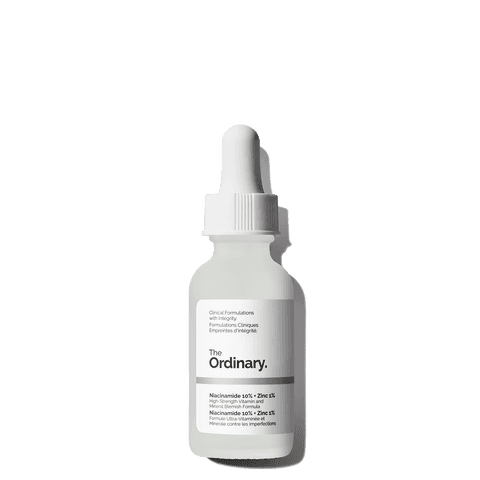
The Ordinary
Niacinamide 10% + Zinc 1%
One of the most-searched serums in the US.
Sold in two places.
When a shopper asks an AI agent where to buy it, only one store gets the recommendation.
Here's why.
The same product on two real websites
Jomashop, a major US retailer with a huge catalog, sells the exact same serum. But look at what the AI agent actually sees ↓
What the AI agent extracts from each store
Sephora exposes 15+ structured attributes: skin type, concerns, ingredients, ratings from 9,000+ reviews, return policy, GTIN, category hierarchy. An agent can verify everything it needs to recommend with confidence. Jomashop's page, fetched by an agent, is a blank shell. It only renders with JavaScript.
What does “a blank shell” mean?
When an AI agent fetches Jomashop's product page, it gets a page that only renders with JavaScript. No price. No stock status. No ingredients. And the little data that does exist comes from a watch-catalog template. The product title literally reads “The Ordinary Ladies Niacinamide 10% + Zinc 1%,” with the barcode stuffed into the title.
<title>The Ordinary Ladies Niacinamide 10% + Zinc 1% 769915190431</title>
<div id="root"></div>
<script src="/static/js/main.js"></script>
// price: not present // stock: not present // ingredients: not present
Same serum. Same brand. Same formula.
Sephora matches on 15 attributes. Jomashop matches on 1.
The agent picks Sephora. Every time.
This isn't a small-store problem. It's a data problem. and size doesn't protect you.
This is exactly what LayerTen fixes.
We take your existing product data, the information already on your pages, and structure it so AI agents can read, compare, and recommend your products.
No manual data entry. No code changes. Connect your store and we handle the rest.
Data as observed in March 2026. Product availability and structured data may change. Sephora and Jomashop are not affiliated with LayerTen.
UCP + LayerTen
UCP is the highway. LayerTen is the exit to your store.
UCP (Unified Commerce Protocol) is an open standard, in production with Walmart, Target, Wayfair, and Gap, backed by Visa, Mastercard, Amex, Stripe, and PayPal, that lets AI agents read a merchant's catalog and complete checkout without a human browser. Shopify, WooCommerce, and others are rolling out native UCP support, so millions of stores are about to become transactable overnight.
That's the floor, not the ceiling. Every store with UCP still competes for the same recommendation slot inside ChatGPT, Gemini, Perplexity, and Claude. That's where LayerTen lives.
Solves checkout.
The floor: it makes you transactable. Agents can read your catalog, build a cart, and complete a purchase, if you expose a UCP endpoint.
The floor
Wins the deal.
The brain: it reads each query's context and produces the offer that gets chosen: the right product, the right data, the right price.
The brain
You capture revenue.
Transactable + chosen = conversion. The store the AI actually sends a buyer to, and the one that can close the sale when it arrives.
The upside
How we work
Built and run by the team that builds it.
You work directly with the people who build LayerTen. There is no account manager in between, and you are not handed off to an agency.
The product is shaped by a small group of early merchants whose catalogs we work on directly. What ships is what their stores actually needed, not a roadmap written in advance.
LayerTen is built on the open standards agent commerce runs on, so your product data stays portable across every agent platform rather than locked to ours.
Shopify Partner
E-commerce ecosystem
Open standards
UCP, ACP, MCP
Istanbul & New York
Where we build
Early partner program
A small group of merchants
How do you stack up against competitors in AI agent visibility?
Enter your store URL. We'll analyze how AI shopping agents rank you across ChatGPT, Gemini, Perplexity, and Google AI Overviews.
Free · No credit card · Results in about 10 minutes
Working with a small group of early commerce partners.
Your data is never shared. See our privacy policy.